Does Homeowners Insurance Cover Storm Tree Removal?
When homeowners insurance pays for storm tree removal vs. when it doesn't, what documentation to gather, and how we help you work with your adjuster.
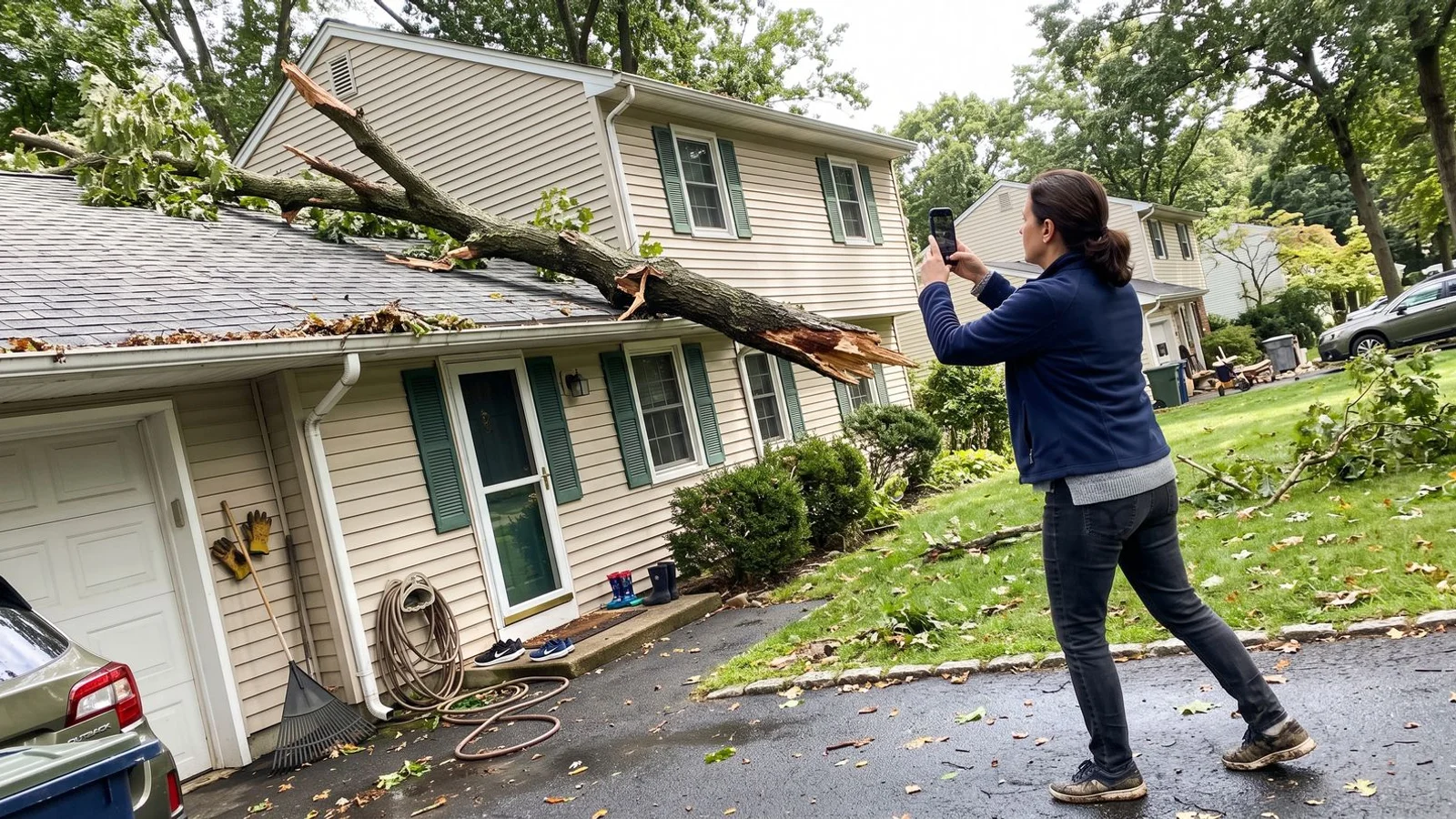
The Short Answer: Does Insurance Cover Tree Removal?
If you are wondering, does insurance cover tree removal, the answer depends entirely on the resulting damage. Homeowners insurance in the US covers the cleanup when a storm knocks a tree onto a covered structure like your house, garage, or fence.
Your policy also generally pays out if the fallen tree blocks emergency access to your driveway.
Our team sees a lot of conflicting information online about this topic. The dividing line is always whether property damage actually occurred.
Preventive removal of a standing tree is almost never covered by a standard policy.
This rule applies even if you are worried the trunk might snap during the next big storm. Let’s look at the exact coverage limits you can expect and explore the specific documents your adjuster will demand.
When Insurance Usually Pays
A standard US homeowners policy typically pays for tree removal if the trunk or heavy branches strike a covered structure. This includes direct hits to your primary house, a detached garage, or a built-in shed.
Our estimators find that insurers have very specific triggers for approving a claim. You need to understand these rules to avoid getting a denial letter.
- Tree hit your home or garage: Structural damage activates your primary dwelling coverage, which is the standard trigger for a tree fell on house insurance payout.
- Tree crushed your vehicle: Auto comprehensive insurance handles this situation, not your standard homeowners policy.
- Tree blocks a driveway: Insurers will pay to clear emergency access routes or ramps for disabled residents.
- Tree destroyed your fence: This falls under “other structures” coverage, which usually pays up to $500 per tree and $1,000 per incident for debris removal.
- Neighbor’s tree crossed the property line: Your own policy pays for the cleanup on your side of the boundary regardless of who planted the tree.
We often remind clients that insurance companies might seek reimbursement from your neighbor’s insurer if the neighbor was provably negligent. This legal process is called subrogation. A successful subrogation can even refund your out-of-pocket deductible.
When Insurance Usually Doesn’t Pay
Insurers will deny removal claims if a tree falls in your yard without damaging any structures. They also refuse to pay for preventive tree removal.
Our crews get calls every week from homeowners hoping their policy will pay to cut down a leaning oak. The reality is that insurance covers sudden accidents, not deferred yard maintenance. If a trunk collapses simply because of old age or untreated root rot, your carrier will likely deny the property damage claim due to homeowner negligence.
- Preventive removal of a standing tree: You pay out of pocket if you are just worried a tree might fall.
- Dead tree removal for safety: Removing a diseased tree without a covered incident is considered routine property maintenance.
- Trees leaning on your property: Unless it has actually detached and struck something, the cleanup is not covered.
- Routine maintenance pruning: Trimming heavy branches away from your roof is strictly your responsibility.
- Land clearing for construction: Preparing a lot for building is never covered by standard residential policies.
We always recommend budgeting for these routine maintenance tasks. A typical non-emergency tree removal in the US averages about $850 in 2026, though large complex trees can exceed $2,000.
There are rare exceptions where high-value policies or special endorsements include limited coverage for hazardous trees threatening a structure. You should check your specific policy documents or ask your local agent to verify your individual limits.
What Documentation Adjusters Ask For
Adjusters require exact proof of the damage before they will authorize a payout. They need to see the fallen tree in its original resting place on the structure.
Our field teams use industry-standard software like Xactimate to document the scene properly. This ensures your carrier gets the exact line-item codes they need to process the payment quickly.
Every storm removal package must include three critical components:
- Dated photos: The camera captures the damage from multiple angles with the tree still in place before any chainsaws start.
- Itemized Xactimate estimate: Adjusters want labor, crane equipment, cleanup, and hauling broken out clearly into standardized codes.
- Written damage description: This official document goes on company letterhead to describe the exact cause of failure and the resulting structural impact.
We know exactly what the desk adjuster needs to see. Having this standardized package in hand when you file the claim makes the approval process substantially faster.
What to Do After a Tree Hits Your House
Evacuate the property immediately if the roof structure is compromised. Your personal safety is the only priority during the first few hours after an impact.
Our emergency operators instruct every caller to treat all downed wires as active power lines. Moving too quickly around a damaged property can lead to severe injury.
Follow these strict steps immediately after an incident:
- Stay safe: Do not re-enter a compromised structure or walk on a damaged roof, and assume any nearby lines are live.
- Call your carrier’s claims line: Get a formal claim number opened immediately to start the clock on your payout.
- Photograph everything: Take pictures of the damage from a safe distance before any cleanup begins.
- Call the professionals: Dial 914-907-4131 to get a crew on site, because we dispatch 24/7 to help local clients process their storm tree removal insurance westchester claims.
- Keep the debris: Do not dispose of the tree yet, because the field adjuster will likely want to see it in place or in pieces on site.
We have a comprehensive resource to walk you through the entire process. See our complete guide on what to do when a tree falls on your house for the full sequence of events.
Adjuster Coordination
Property owners must file the actual insurance claim themselves directly with the carrier. The contract exists solely between you and the insurance company.
We never file the initial claim on your behalf. The service instead focuses on providing all the specialized documentation that staff adjusters require.
Here is what you can expect the team to deliver:
- Written scope of work featuring itemized pricing for labor and disposal.
- Dated damage photos taken from multiple angles to prove the incident severity.
- Cause description identifying wind, ice, or root failure as the primary factor.
- Coordination on any structural repairs that fall outside our immediate scope.
Our administration team understands that adjusters sometimes need extra details to finalize a check. The representative might request a mid-work update, additional photos, or a phone call about the tree’s health at the time of failure.
We accommodate all of these specific requests rapidly to prevent payout delays.
Deductibles and Policy Limits
Every insurance payout requires the homeowner to cover their deductible first. A storm cleanup priced at $2,500 against a standard $1,000 flat deductible means you receive $1,500 from your carrier and pay $1,000 out of pocket.
We see more US carriers shifting to percentage-based deductibles in 2026, especially in storm-prone regions. A 2% wind and hail deductible on a house insured for $400,000 means you must cover the first $8,000 of damage yourself.
| Deductible Type | How It Works | Typical Out-of-Pocket Cost |
|---|---|---|
| Flat Dollar | A set amount applied directly to the final claim. | $500 to $2,000 |
| Percentage | Based on the total dwelling coverage limit of the home. | 1% to 2% of home value |
Our estimators also check for specific caps on tree removal spending. Many standard policies limit debris removal to $500 per tree and $1,000 total per incident.
You will need to cover the overage if a massive trunk requires a crane and the final bill exceeds those exact limits.
We flag these potential shortfalls early in the process whenever possible.
When Insurance Won’t Cover But You Still Need the Work
Homeowners frequently face situations where a dead or hazardous tree needs to come down, but insurance will not assist. You still have to address the hazard to protect your family and property.
Our tree removal service is fully available as a private, out-of-pocket project. The national average to remove a mature tree in 2026 is around $850, but complex jobs near power lines can reach $2,000 or more.
Clients receive the exact same rigorous standard of care regardless of who signs the check. The service includes the same detailed itemized quote, the same commercial liability protection on the company side, and the same thorough yard cleanup.
For highly urgent storm-specific situations, please see our dedicated pages for emergency tree service and storm damage cleanup.
If you need more local information on this topic, check out these related guides:
Contact the office today to schedule an inspection, get a concrete estimate for your property, and finally answer the question of does insurance cover tree removal for your specific situation.