How Fast Can an Emergency Tree Crew Respond?
Our emergency tree response times in Westchester County: same-day 24/7 dispatch, how storm surges affect scheduling, and what to have ready when you call.
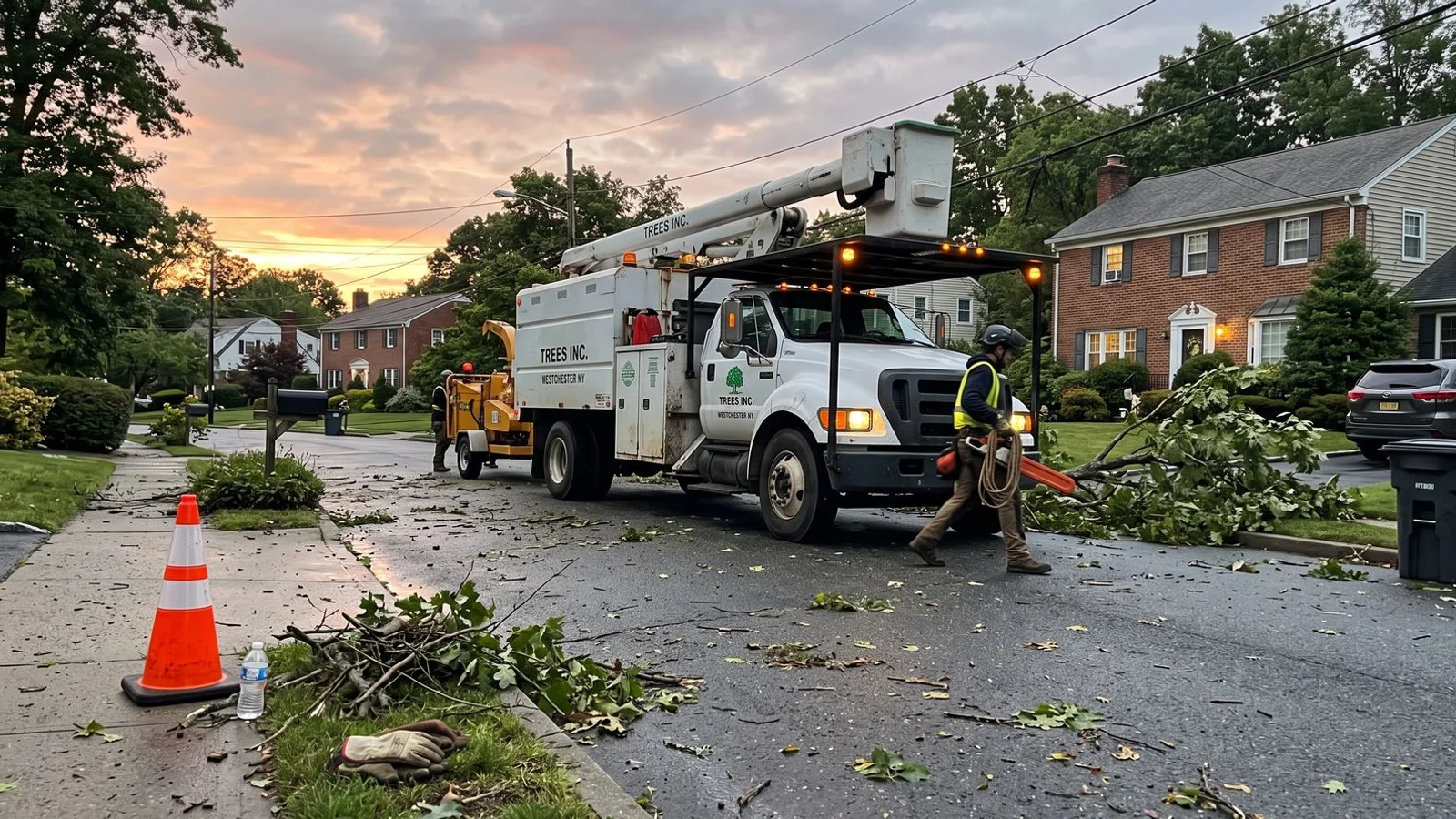
We know that waiting for an emergency tree crew while a massive oak rests on your roof is incredibly stressful.
The 2026 LexisNexis Home Trends Report shows average property damage claims now exceed $17,000. This rising cost makes a rapid emergency tree service response time more critical than ever.
Our goal today is to explain exactly what dictates a crew’s arrival speed and how you can take control of the situation.
Let’s look at the actual data behind dispatch timelines to see exactly how fast tree removal can happen. You will also learn practical ways to coordinate with utilities and secure your property safely.
Typical Response Times
Our typical response time for an immediate hazard is just one to three hours under normal, non-storm conditions. A direct strike on your home demands this immediate attention to prevent further structural damage. Arrival windows will naturally stretch during widespread severe weather events.
We prioritize major storm dispatch based on life safety and structural threats, meaning lower-priority calls may wait 24 hours or more. A local industry standard is to begin overnight storm calls first thing the next morning. Routine tasks like standard removals or pruning generally take three to ten days to schedule during a normal season.
| Condition | Expected Arrival | Primary Focus |
|---|---|---|
| Non-Storm Hazard | 1 to 3 hours | Immediate stabilization |
| Isolated Storm Damage | Same-day or next morning | Preventing secondary damage |
| Major Widespread Storms | 24+ hours for non-emergencies | Prioritized triage based on safety |
| Non-Emergency Routine | 3 to 10 days | Planned removals and pruning |
Our team relies on this clear scheduling framework so you always know what to expect. You should always ask for an estimated time of arrival when you first call for help. This simple question provides peace of mind while you wait for the trucks to arrive.
How We Prioritize
Our dispatch queue automatically moves you to the very top if your situation involves life safety, active structure impact, or severe utility hazards. A chaotic nor’easter requires a strict triage system to handle the sudden surge in demand. This logical sequence ensures the most dangerous situations are handled before simple cleanup tasks — a tree that has fallen on your house always jumps ahead of a blocked driveway.
Our crews coordinate safely around energized lines, but OSHA mandates a strict 10-foot minimum approach distance for any unqualified person. This means you must stay far back if a tree brings down a utility wire. Local protocols from Con Edison strongly advise treating all downed wires as live and staying at least 30 feet away.
We sequence emergency calls using six specific categories during a major event. The following list explains exactly how triage works when multiple requests flood the system. Check these categories to understand where your situation currently falls.
- Life-safety: Severe emergencies like a tree pinning someone, reported injuries, or active gas leaks take absolute precedence.
- Active structure impact: A direct strike on a home with residents inside requires immediate stabilization.
- Utility hazards: Trees on lines that threaten power or fire risk require coordination with local utilities like Con Edison.
- Access blocks: Road and driveway blockages that prevent emergency vehicle access are cleared next.
- Property protection: High-risk hanging limbs threatening structures or showing imminent failure risk are addressed before they fall.
- Cleanup: Post-event debris and downed trees that pose no immediate hazard are scheduled last.
Our dispatch team will automatically bump you up the queue if your incident falls into those first three critical categories. Providing accurate information immediately upon calling drastically speeds up this entire dispatch process. The person on the other end of the phone needs very specific details to assess the danger level.
What to Have Ready When You Call
Our dispatchers need to know your exact address and the current utility status before a truck ever leaves the yard. A quick assessment of the situation helps categorize the priority level accurately. Have these five details ready before you pick up the phone.
- Address: Provide your exact street and town.
- Type of hazard: Give a brief, clear description of what happened.
- Utility status: State clearly if power lines are down or involved.
- Photos: Snap a few pictures from a safe distance if it is practical and secure to do so.
- Best callback number: Provide a reliable mobile number in case details are needed en route.
We will provide an estimated time of arrival the moment your crew is dispatched. Weather conditions or sudden life-safety emergencies can occasionally alter this timeline. The dispatch office will call you directly with an update if any changes occur.
Storm Preparedness
We strongly advise preparing your property well before a forecasted nor’easter or hurricane makes landfall. Preventive maintenance is always cheaper and safer than an emergency rescue. Data from the Arbor Day Foundation confirms that well-maintained urban trees are far less likely to fail under high wind stress.
Our crews see massive, healthy-looking branches snap simply because they were never thinned out. Taking a few simple steps today can protect your home tomorrow. Follow this checklist when severe weather is on the horizon.
- Prune ahead of the storm: Thin out thick canopies early, and see our storm-prep pruning guide for detailed steps.
- Have the emergency number saved: Store 914-907-4131 directly in your contacts.
- Know where your utility shutoffs are: Locate your main electrical breaker and gas main ahead of time.
- Charge phones and have flashlights ready: Power outages are highly likely during severe wind events.
- Move cars away from large overhanging trees: Park vehicles in a garage or an open space clear of potential fall zones.
Our storm preparation advice stems from years of cleaning up avoidable property damage. A proactive approach truly makes a massive difference in your personal safety. Knowing your service provider’s exact territory ensures you do not waste time calling someone who cannot reach you quickly.
Coverage Area
Our trucks provide the 24/7 tree service Westchester residents trust, responding across Westchester County within a 25-mile radius of the Rye Brook base. This targeted footprint allows for rapid arrival times when minutes matter. Fast access across major routes like the Hutchinson River Parkway and I-287 is crucial for speed.
We cover Larchmont, Scarsdale, Bronxville, White Plains, Rye, New Rochelle, and most of the county north up through Peekskill and Yorktown.
After Hours
True emergencies do not politely wait for regular business hours. A massive branch falling at 2:00 AM requires the exact same urgency as a midday incident.
Our after-hours emergency line at 914-907-4131 is answered live around the clock. Calling this number instantly connects you with someone who can evaluate the danger. An overnight assessment determines if the hazard is stable enough for morning work or if a crew must roll out immediately.
Our complete resource library has more information on what to do when a tree falls on your house or how to handle hazardous hanging limbs. You can also review the main emergency tree service page for full service details. Both of these resources offer specific instructions for securing your property safely.
Conclusion
We hope this breakdown clarifies the standard emergency tree removal response time and helps you feel more prepared.
Rapid action and clear communication are your best tools when disaster strikes. If you are ever in doubt about a hazardous tree, save 914-907-4131 in your phone right now and call for immediate assistance.